The Science of Luck
Resources
The books, talks, and research behind the Luck Quotient — the same traditions that ground your report. Curated, credible, and publicly accessible.
Books

The Luck Factor
CoreRichard Wiseman
Random House, 2003 · University of Hertfordshire
The book behind the most influential psychological study of luck. Wiseman tracked over 400 self-described 'lucky' and 'unlucky' people for a decade and found both had equal access to chance opportunities — the lucky ones simply noticed and acted on more. He distils this into four learnable habits: maximise chance opportunities, listen to intuition, expect good fortune, and turn bad luck into good.
View →
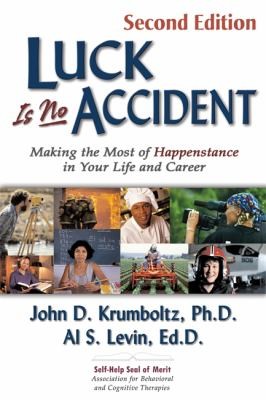
Luck Is No Accident
CoreJohn D. Krumboltz & Al S. Levin
Impact Publishers, 2004 · Stanford University
The original book behind Planned Happenstance Theory. Krumboltz argues that unplanned events — a chance meeting, a hobby picked up on a whim — shape careers far more than careful planning. Rather than treating uncertainty as a problem, it teaches five capacities (curiosity, persistence, flexibility, optimism, risk-taking) that turn unplanned events into opportunity.
View →
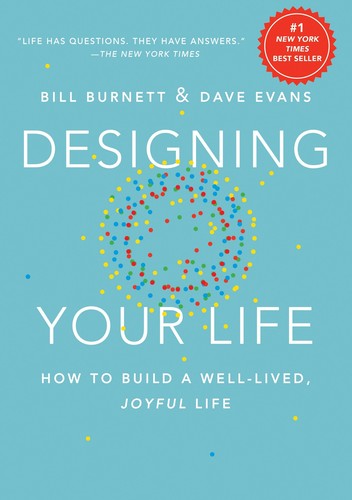
Designing Your Life
CoreBill Burnett & Dave Evans
Knopf, 2016 · Stanford Design Program / Life Design Lab
The Stanford bestseller that applies design thinking — reframing problems, prototyping, and treating life as a work in progress — to careers and personal life. It argues that a well-designed life stays constantly evolving and open to surprise rather than aiming for one perfect plan. The direct intellectual ancestor of the Designing Your Luck approach.
View →
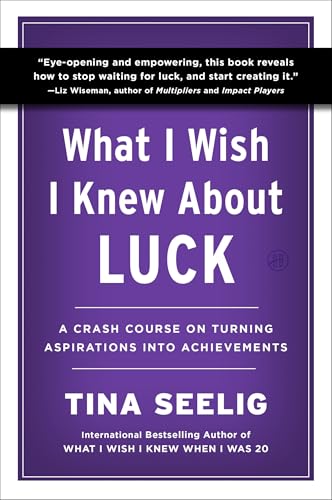
What I Wish I Knew About Luck
In the NewsTina Seelig
HarperCollins, 2026 · Knight-Hennessy Scholars, Stanford University
Seelig argues luck isn't something that happens to you — it's something you build. She splits 'fortune' (what happens to you, outside your control) from 'luck' (what you create through your choices). Her metaphor is a sailboat: build your ship (values and self-story), recruit your crew (network), and hoist your sail (action) to catch the winds of luck.
View →
Video
Stanford Luck Researcher: How to Manifest the Life You Want
In the NewsThe Mel Robbins Podcast ft. Dr. Tina Seelig
YouTube, April 2026
An hour-long, accessible breakdown of Seelig's luck framework: the fortune-vs-luck distinction, the sailboat/crew/sail model, six types of risk, and concrete daily actions (asking small favours, 'stirring the pot' in unfamiliar situations) that increase the odds of a lucky break.
Richard Wiseman on How to Keep a Luck Diary, and More
CoreThe Tim Ferriss Show
YouTube, May 2022
A wide-ranging conversation with Wiseman. The luck material centres on the 'luck diary' — writing down one positive thing each day to retrain attention toward opportunity — and revisits the core Luck Factor finding: lucky and unlucky people see the same world but pay attention to different parts of it.
Research & Articles
What Happy People Think About Luck
CoreEmiliana R. Simon-Thomas
Greater Good Science Center, UC Berkeley, 2020
A study of 844 students found that happy people are less likely to see luck as an outside force controlling their fate, and more likely to see themselves as personally lucky. Believing luck happens to you saps agency; believing you are lucky functions like optimism and gratitude, and goes with greater happiness.
View →
What Drives Success, Hard Work or Luck?
CoreJill Suttie (on Robert Frank's research)
Greater Good Science Center, UC Berkeley, 2016
A readable summary of economist Robert Frank's work on luck and meritocracy: successful people systematically underestimate how much chance contributed to their success, due to biases like the halo effect and hindsight bias. People who consciously credit external luck become measurably more generous.
View →
Broaden-and-Build Theory of Positive Emotions
CoreBarbara Fredrickson (summary)
PositivePsychology.com · UNC Chapel Hill
Fredrickson's theory that positive emotions (joy, interest, curiosity) widen what we notice and consider possible, while fear narrows our focus to a single threat. Over time this broadened thinking builds lasting resources — new skills, relationships, resilience — and speeds recovery from stress.
View →
The Strength of Weak Ties
CoreMark Granovetter
American Journal of Sociology, 1973 · Stanford University
One of the most cited papers in social science. Granovetter found people get their best opportunities — especially jobs — not from close friends, but from loosely connected acquaintances who move in different circles. These 'weak ties' bridge to new information that close ties can't provide.
View →
Cultivating Serendipity
CoreChristian Busch
Stanford Social Innovation Review · The Serendipity Mindset
How people and organisations create 'smart luck' by reframing what's already in front of them. Through the story of a South African nonprofit (RLabs), Busch shows how recombining existing skills, people, and circumstances — rather than waiting for ideal conditions — turns uncertainty into opportunity.
View →